
Why Andy Burnham's EU policy fails his own 'Makerfield Test' in big red flag for Labour – Brian Monteith
Polls suggest the people of Andy Burnham’s constituency, Makerfield, are not happy with his stance on the EU
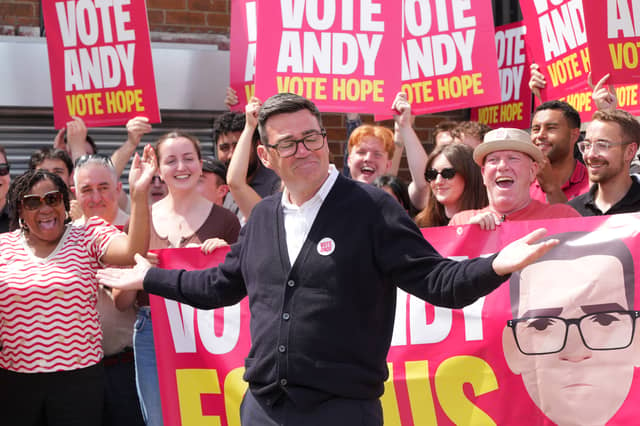

It was only back in June that Andy Burnham won the Makerfield by-election. A month later, he was Prime Minister. That was no mean feat, but it was no happenstance. It was a calculated and risky gamble, carefully planned and thought through. All he required was to get the timing right.
When the Labour MP for Makerfield, Josh Simons, took the unusual step of standing down to force a by-election in a once safe Labour seat, Burnham already knew he was going to throw his hat in the ring. What made it risky was that, in 2016, Makerfield voted to leave the European Union and there was little evidence the electorate’s sympathies had changed since then.
In the subsequent general elections of 2017 and 2019, the Labour majorities had shrunk and, in 2024, Reform UK moved into second place ahead of the Conservatives. Nigel Farage’s party then took all eight of the wards available in the council elections with over 50 per cent of the vote.
READ MORE: How Andy Burnham's broken Brexit pledge risks making him the new Keir Starmer – Brian Monteith
Burnham the genuine article?
Burnham managed to turn that tide around by reassuring voters he was not just another chancer from the uniparty – those Labour and Conservative leaders who, over the last two decades, had said one thing and done another by going back on their word on so many issues.
Burnham had to show he was different, a genuine article, that he listened to the voters and would deliver what they wanted on the issues that mattered to them.
In particular, he gave reassurances he would not reopen the debate about the UK’s relationship with the European Union, saying: “I am not proposing that the UK considers rejoining the EU. I respect the decision that was made at the referendum and it is going to undermine everything I have said about strengthening democracy if we don't respect that vote.”
He didn’t stop there, however; I can’t say if Burnham thought up the idea of the “Makerfield Test” but in his acceptance speech following the count he pledged to his local electors – and by extension, the British public – that he was not going to be a one-night stand politician who would quickly forget them once in London.
Instead, Burnham announced “a Makerfield test at the heart of British politics that will make sure the places Westminster has neglected will now get fairness”. As defined by the official Burnham Programme website, the Makerfield test is “a policy appraisal criterion”. “Applied to any proposed government measure, it asks a single question: will this work for the people of Makerfield and the communities like it across England? If the result is negative, the policy does not proceed in its current form.”
The Prime Minister talked of his premiership probably being the last chance for Labour, asking us to take him at his word.
What Makerfield thinks
Well, it so happens that a survey commissioned by Britain Unbound has just been conducted by the respected pollsters, Survation, using similar methods to its work during the 2026 by-election, weighted to capture accurate voter distribution in the constituency. The purpose was to establish if the Prime Minister’s policies would meet his own “Makerfield Test” – whereby policies should not be introduced across the UK if they would not be acceptable to the electors of Makerfield.
It asked voters who should decide UK economic policy on ten different issues. The poll deliberately did not mention the EU in order to break voters out of so-called Brexit ‘tribes’. Instead, the poll was designed to test core attitudes on where decisions are made.
The test results are in, and in every case, by a substantial majority ranging from 67 to 80 per cent, the Makerfield voters said policies should be decided by sovereign UK governments taking sole responsibility and acting alone – not through voluntary international agreements or following international bodies.
The issues were: state aid for regional development (80 per cent), setting VAT rates (78 per cent), refusing criminals entry (75 per cent), employment law (75 per cent), UK food standards (74 per cent), railway nationalisation (74 per cent), creating a public energy provider (72 per cent), buying British (70 per cent), animal welfare standards (69 per cent) and medicine approvals for the NHS (67 per cent).
At no time were the alternatives to the UK government deciding for itself any higher than 17 per cent.
Voters reject the loss of sovereignty
The polling, while a stunning rejection of Burnham seeking to give away the making of laws on many of these issues to overseas officials and politicians (with disputes being settled by foreign judges) should come as no surprise. In eight polls over the last year, The Observer found a majority in favour of staying out of the European Union while other polls showed any support for joining immediately melted away if adopting the Euro and accepting the open borders was the price to pay.
Likewise, other polls have showed repeatedly that, while the British public find the sound of being in the EU attractive, they recoil and say no when the full cost is posted (now an estimated £35 billion a year) or when the terms and conditions are explained.
The point is simple enough; people are willing to consider Britain working with other countries to improve their lives – but reject losing their sovereignty over decision-making. Be they in Makerfield or the whole of the UK, they want to control their destiny. For a Prime Minister who advocates greater devolution, it jars that he wants to give away the right to make our own laws to people we have never elected.
Burnham’s pivot towards the EU fails his own Makerfield Test. It is a big red flag. He ignores it at his peril.
Brian Monteith is a former member of the Scottish and European parliaments and a member of Britain Unbound’s Advisory Council.
Comments
Want to join the conversation? Please or to comment on this article.